Water damage restoration around Atlanta
Water damage restoration, water removal and flood cleanup for homeowners in 59 towns around Atlanta. One phone call puts you through to a local, independently owned restoration outfit for extraction, drying and basement flood cleanup.
Call (844) 690-4150 A referral service. The company you are connected with does the work.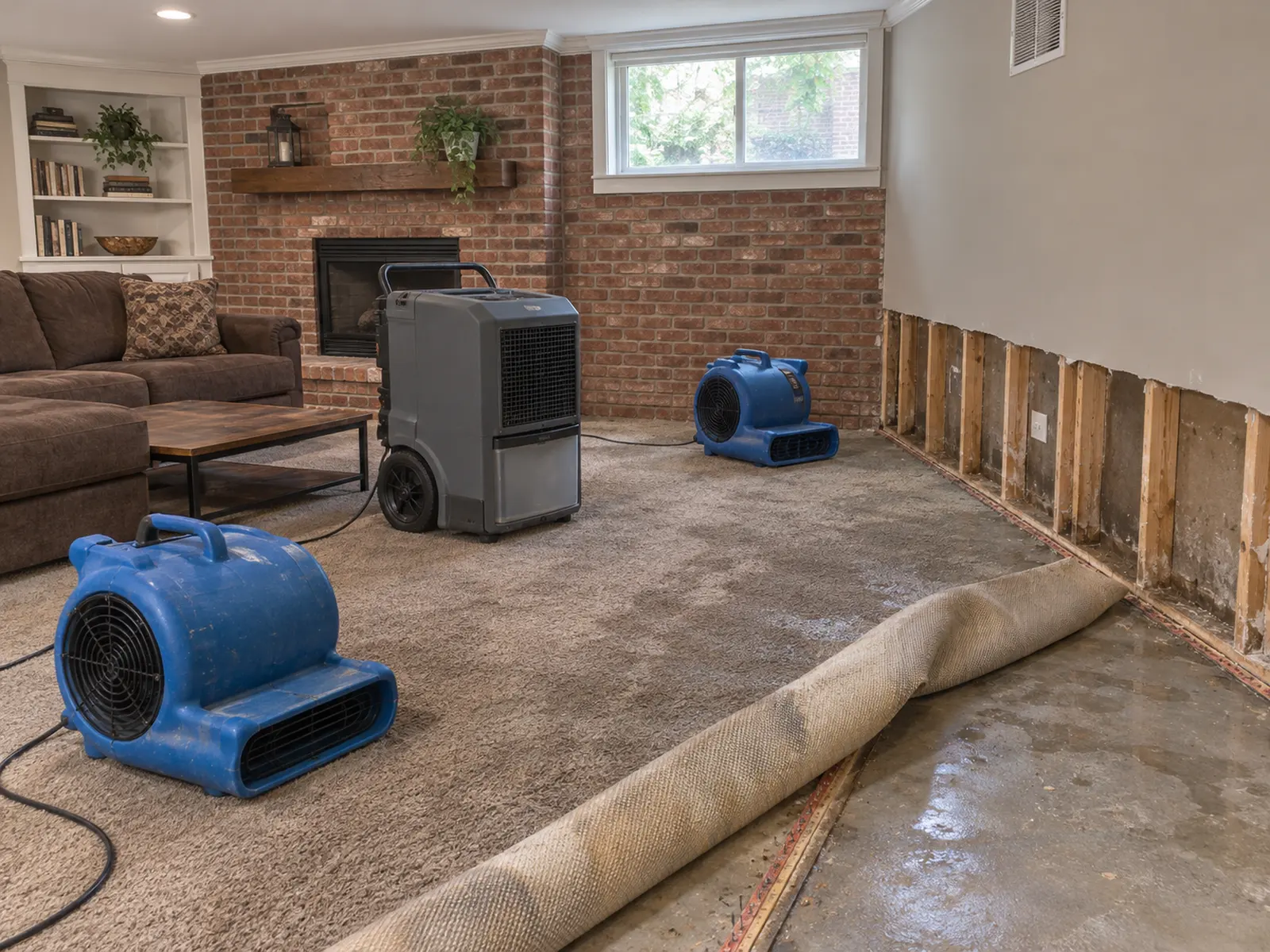
Water where it shouldn’t be?
Broken pipes, sewage backups, leaking appliances and overflowing toilets can all soak floors, walls and cabinets. A call here rings through to a water damage restoration outfit based in your corner of metro Atlanta, run independently of this site. The company you speak with can explain water extraction and drying, and it sets its own price and schedule.
Water damage restoration guide
What happens after water gets into an Atlanta-area home
Most water damage restoration jobs move through the same stages, whether the water came from a burst pipe in Marietta, a sewage backup in Lawrenceville or a flooded basement in Peachtree City. Knowing the stages helps you ask the right questions when you talk with a restoration company.
Stop the water and check safety
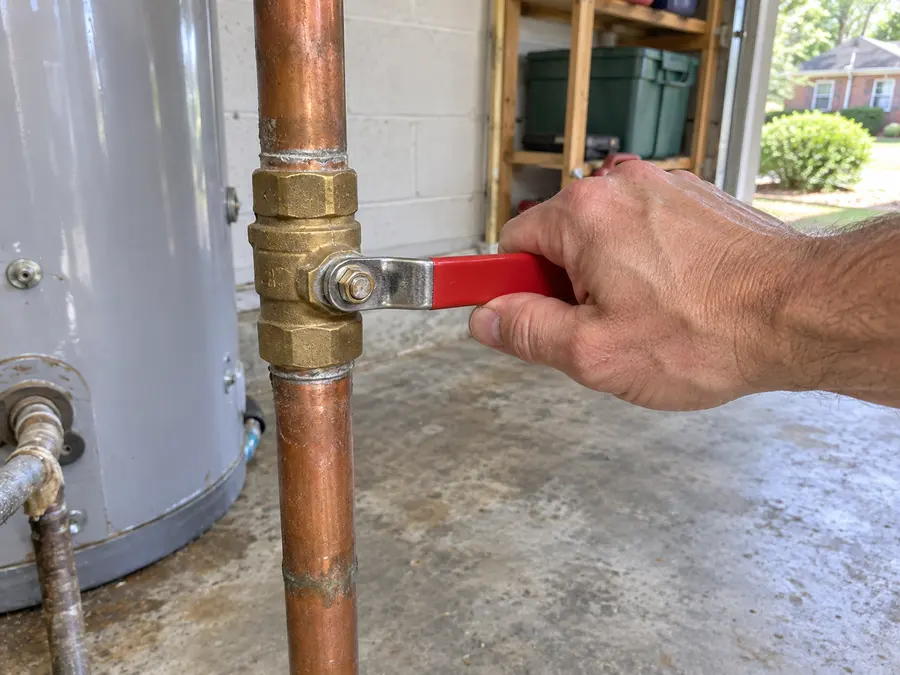
Close the main or the fixture valve first. Per FEMA, leave wet electrical equipment alone, touch nothing electrical while you are standing in water, and switch off power only when you can do it safely (FEMA).
Water removal and extraction
Standing water comes out first. Pulling out every bit of pooled water without delay protects health and cuts down on structural harm, per an EPA flood cleanup fact sheet (EPA via HUD).
Tear-out of wet materials
FEMA advises removing all drywall and insulation that has been in contact with floodwaters, and throwing out items such as mattresses and carpeting that absorb water and cannot be cleaned or disinfected (FEMA).
Drying and dehumidifying
The CDC lists fans, air conditioning units and dehumidifiers for drying (CDC). For indoor humidity, the EPA wants readings kept below 60 percent and prefers a band of 30 to 50 (EPA).
Cleaning, then rebuilding
Hard surfaces get cleaned and disinfected before rebuilding. FEMA notes a permit may be required before rebuilding begins, so check with your city or county (FEMA).
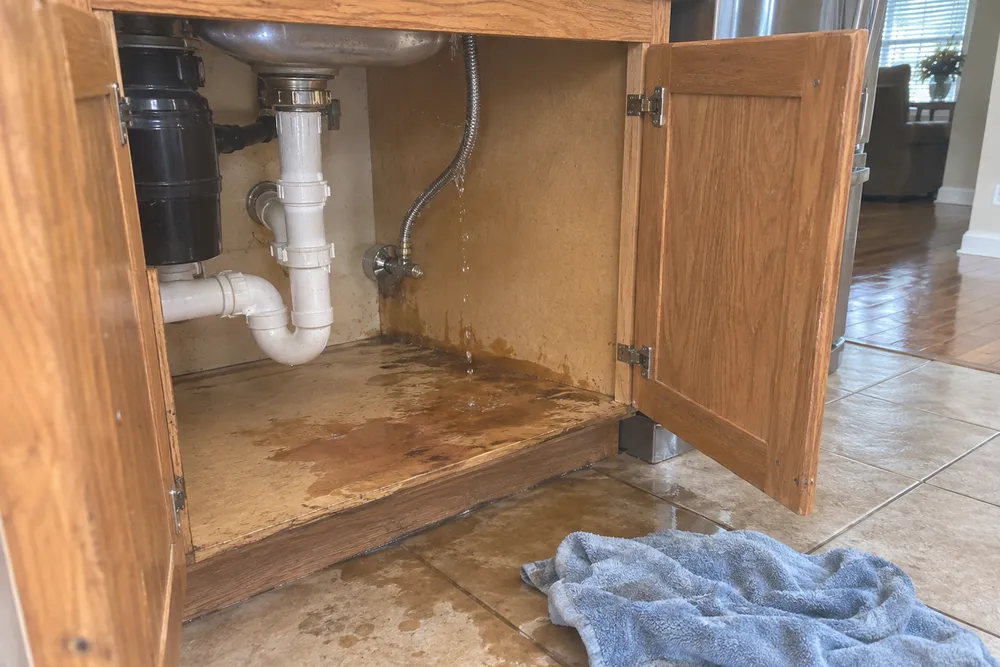
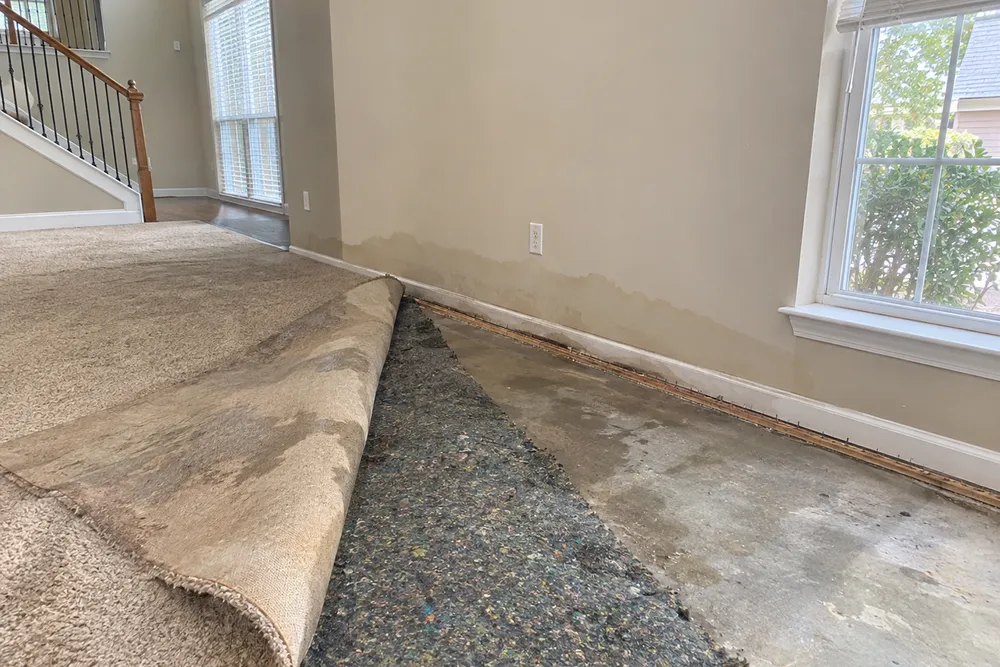
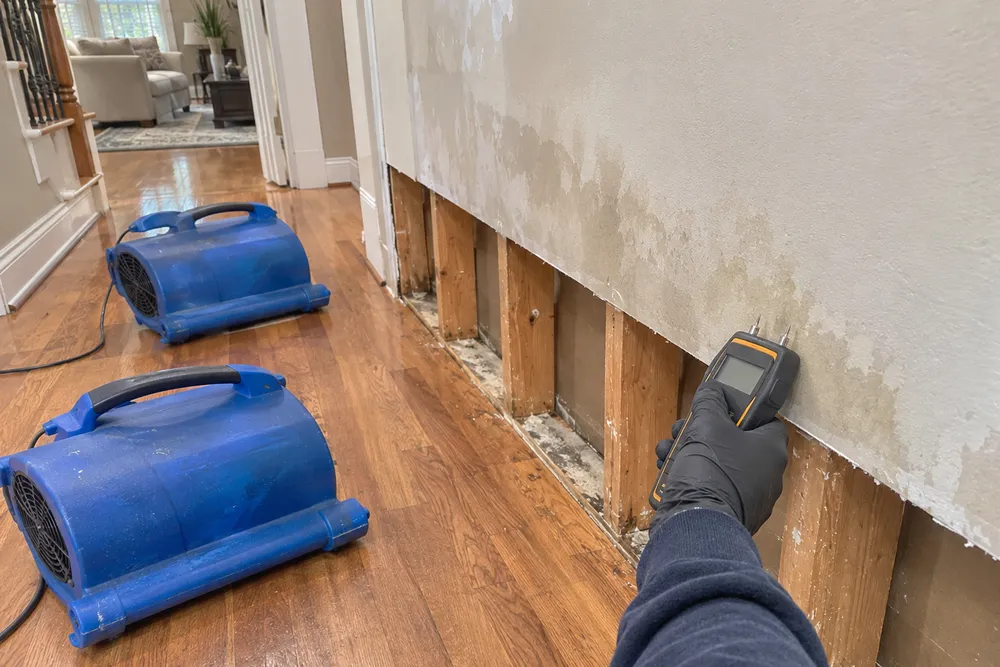
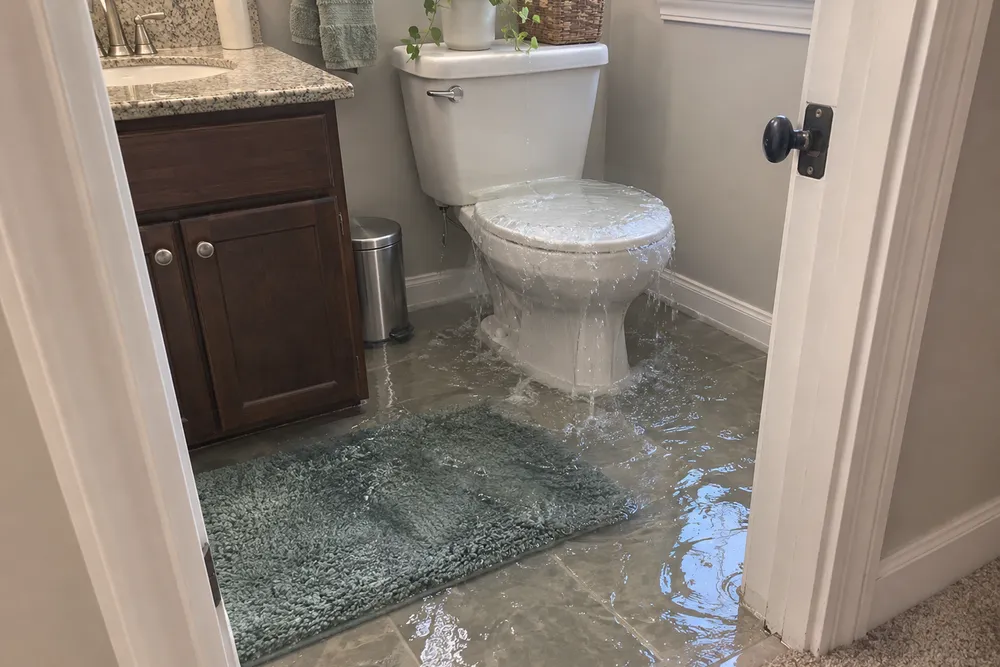
Representative photos.
Clean, gray and black water
Restoration companies sort a water loss by how contaminated the water is, using three categories from the IICRC S500 water damage restoration standard. The category shapes how the cleanup is done.
- Category 1, clean water
- Water coming from a sanitary source, like a split supply line, that carries little danger if it touches skin or is swallowed or inhaled (SCRT summary of S500).
- Category 2, gray water
- Water with some contamination that could cause sickness or discomfort, such as discharge from dishwashers and washing machines (Florida Building Commission).
- Category 3, black water
- Grossly contaminated water that can contain harmful agents, such as sewage, a toilet backflow that started past the trap, or floodwater from an overflowing creek or river (IICRC).
Clean water does not stay clean. The S500 standard notes that Category 1 water can deteriorate to Category 2 or 3 if enough time passes (SCRT).
Why the first 48 hours matter
EPA guidance puts a 24 to 48 hour limit on drying wet areas and belongings (EPA). Anything that cannot be fully cleaned and dried inside that limit is usually discarded (EPA via HUD).
A full dry-out can take longer than people expect. After a flood, the drying process could take several weeks (EPA via HUD).
Before cleanup starts
- Before anything is carried out, document the damage inside and out on camera, sorted by room (FEMA).
- Cover up for cleanup: FEMA lists boots that keep water out, gloves made of rubber or plastic, and full-length sleeves and pant legs (FEMA).
- Keep kids away from the work. FEMA also says people who have asthma or other lung or breathing problems should not go into a home where water has leaked inside (FEMA).
Water damage questions
What is the difference between water mitigation and water damage restoration?
Mitigation is the work that stops the damage from spreading: water extraction, removing soaked materials and drying. Restoration usually refers to the whole job, including the rebuild that puts drywall, flooring and trim back afterward.
Can wet drywall and carpet be saved?
That turns on how clean the water was. If the only water involved was clean rainwater, drywall, fiberglass batts and carpet are occasionally salvageable after drying, according to the EPA flood fact sheet, although swapping in new material tends to be better for indoor air (EPA via HUD). Once floodwater or sewage has touched drywall or insulation, FEMA says to tear it out and discard it (FEMA).
Is sewage cleanup different from a clean water leak?
Yes. The EPA says that if water damage was caused by sewage or other contaminated water, you should call in a professional with experience cleaning and fixing buildings damaged by contaminated water (EPA). Under the IICRC standard, Category 2 and 3 losses call for contamination controls and worker protection (IICRC).
Do I need to wait for an inspection before cleanup?
After declared disasters, FEMA has told residents they do not need to wait for a FEMA home inspection or flood insurance claim inspection to begin cleaning up, as long as they photograph the damage first (FEMA).
Found water? Work in this order
Water keeps spreading into drywall, subfloor and cabinets until the source is stopped. These steps limit the damage while you line up help.
Stop the source
Close the main water shut-off valve, or the shut-off on the fixture or appliance that is leaking, before anything else.
Make it safe
If water has reached outlets, cords or a finished basement, switch those circuits off at the breaker panel before walking through.
Record it and call
Get photos and video of each wet room while everything is still in place, then call to reach a restoration company working in your town.
Find your town
Grouped by county. Each town page covers its own housing stock, local water contacts where the utility publishes them, and background on the town.
Cobb County6 towns
Gwinnett County9 towns
DaculaDuluthGraysonLawrencevilleLilburnNorcrossPeachtree CornersSnellvilleSuwanee
Clayton County8 towns
ConleyEllenwoodForest ParkJonesboroLovejoyMorrowRexRiverdale
Fulton County4 towns
Henry County4 towns
DeKalb County7 towns
Avondale EstatesClarkstonLithoniaPine LakeScottdaleStone MountainTucker
Cherokee County2 towns
Fayette County4 towns
Douglas County3 towns
Walton County2 towns
Barrow County3 towns
Spalding County1 town
Paulding County2 towns
Rockdale County1 town
Polk County1 town
Forsyth County1 town
Haralson County1 town
How the call works
- Who answers?
- A locally operating restoration outfit with no ties to this site. Nobody at 770 Damage picks up the phone or dispatches a crew.
- Who quotes the job?
- Whichever outfit picks up. Ask for its pricing, its license, and when a crew can arrive before you agree to anything.
- How is this site paid?
- A referral network can pay 770 Damage for phone calls that go through. More on how this works.
Last updated